Disclaimer: This article is for informational purposes only and is not legal advice. For guidance tailored to your situation, consult a licensed attorney in your state.
For new drivers, a car accident can feel overwhelming. Beyond the physical shock, the paperwork, insurance calls, and uncertainty about what to do next can create unnecessary stress. Many first-time drivers assume the insurance company will automatically offer a fair payout—but that’s not always the case. Insurers often look for ways to reduce settlements, especially when claimants are inexperienced.
The good news? With the right steps, strong documentation, and a calm, organized approach, you can protect your rights and secure a fair settlement. This guide walks you through a clear, step-by-step process designed specifically for new drivers navigating a car accident claim for the first time.
Report the Accident Immediately
No matter how minor the accident seems, always report it right away. Early reporting strengthens your claim and eliminates room for confusion later.
Why immediate reporting matters:
-
Police reports serve as official legal documentation.
-
Insurance companies rely heavily on these reports when evaluating fault.
-
Witness names and statements captured early are stronger and more reliable.
When speaking to the police or your insurance company, provide accurate, factual details—no guesses or assumptions. Keep your explanation simple and honest.
Important Tip:
Delays in reporting can make the insurance company skeptical. They may claim the damage occurred later or question the severity of your injuries. Reporting quickly helps avoid these issues.
Gather Strong, Organized Evidence
Evidence is one of your most powerful tools during the claims process. The more proof you have, the harder it is for the insurance company to reduce, question, or deny your claim.
What to collect at the scene:
-
Clear photos of vehicle damage
-
Photos of the intersection, skid marks, street signs, and lighting
-
Videos showing the area and how the vehicles were positioned
-
Names and phone numbers of witnesses
-
The other driver’s insurance and license information
Medical Evidence
Even small aches or soreness should be documented. Visit a doctor promptly and keep records of:
-
Hospital visits
-
Medications
-
X-rays or scans
-
Physical therapy
-
Doctor’s notes or injury evaluations
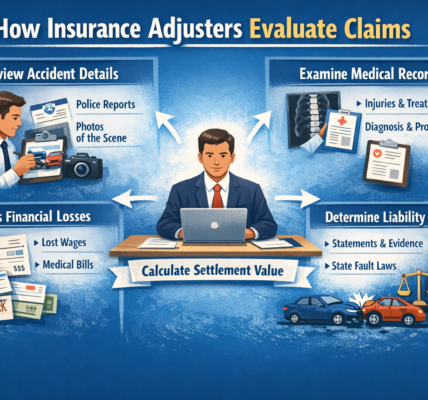
Insurance adjusters heavily rely on medical records, so missing or delayed treatment can weaken your claim.
Stay Organized
Create a simple filing system—both digital and physical—to store:
-
Police reports
-
Medical bills
-
Repair receipts
-
Photos and videos
-
Email correspondence
-
Insurance forms
Having everything in one place makes it easier to respond quickly when your insurer—or lawyer—asks for documents.
File Your Insurance Claim Promptly
Once you’ve gathered your initial evidence, file your claim as soon as possible. Most insurers allow you to file online, through a mobile app, or by phone.
When filing, make sure you:
-
Provide complete and accurate details
-
Attach any available evidence
-
Note the claim reference number
-
Keep copies of all documents submitted
Waiting too long to file can cause delays or even lead to a denial. Early filing shows responsibility, urgency, and credibility.
Review Insurance Offers Carefully
Insurance companies often begin with a low offer. Many new drivers accept it simply because they assume it’s the best they will get—but that is rarely true.
Before accepting any offer:
-
Compare the offer to your actual expenses
-
Consider future medical treatment needs
-
Factor in missed work or school days
-
Review the cost of car repairs or replacement
-
Ask yourself if the offer truly covers all losses
A rushed settlement can leave you paying out of pocket for long-term costs. Patience and a clear understanding of your damages often result in a significantly higher payout.
Pro Tip:
Never accept the first offer without reviewing it with a lawyer or trusted advisor—especially if the accident involved injuries.
Read: How To Handle A Lowball Offer

Hire a Skilled Lawyer When Necessary
While simple accident claims may not require legal help, more complex cases often do. A lawyer is especially valuable when:
-
Injuries are serious or long-term
-
The accident involved multiple vehicles
-
Fault is disputed
-
The insurance company is uncooperative
-
The settlement offer seems too low
What a lawyer does for you:
-
Handles communication with insurance companies
-
Negotiates for the highest possible settlement
-
Prevents unfair deductions or lowball tactics
-
Helps gather missing evidence
-
Represents you in court if necessary
Most car accident attorneys work on a contingency fee basis, meaning they only get paid if you win. This makes professional help low-risk and high-reward.
Communicate Smartly and Professionally
A big part of getting a fair settlement depends on how you communicate with the insurance company.
Smart communication tips:
-
Stay calm and polite—never emotional
-
Answer questions honestly but without unnecessary details
-
Keep detailed notes of every conversation
-
Save all letters, emails, and messages
-
Respond promptly to requests for documents
Professional communication builds credibility and prevents misunderstandings that can slow your claim.
Keep All Records Safe
Missing documentation is one of the most common reasons claims are delayed or reduced. Keeping well-organized records ensures that no piece of evidence is lost.
Documents you should keep:
-
Receipts
-
Estimates
-
Medical reports
-
Police documents
-
Photos and videos
-
Correspondence with insurance companies
-
Notes about symptoms or pain
These records allow your lawyer—if you hire one—to argue your case effectively and increase your settlement.

Conclusion
For new drivers, a car accident can feel confusing, overwhelming, and stressful. But by following a clear, step-by-step plan, you can protect your rights and secure a fair, accurate settlement.
Key steps to follow:
-
Report the accident immediately
-
Gather strong evidence
-
File your insurance claim promptly
-
Review insurance offers carefully
-
Hire a lawyer when the case becomes complex
-
Communicate clearly and professionally
-
Keep all documents safe and organized
With patience, preparation, and the right knowledge, even first-time drivers can navigate the claims process confidently and achieve a fair outcome. You don’t need experience—you just need a plan.
Read: Is It Worth Getting An Attorney After A Car Accident
Last edited: 12/11/2025 by James Carter
Author