Statute of Limitations for Car Accident Claims: A General Overview by State

This article provides general educational information only and does not constitute legal advice. Laws vary by jurisdiction and individual circumstances. Readers should consult a licensed attorney in their state for guidance specific to their situation.
Introduction
After a car accident, most people focus on immediate concerns such as medical treatment, vehicle repairs, and communication with insurance companies. However, there is another critical factor that often receives less attention: legal filing deadlines.
Every state in the United States establishes a statute of limitations that governs how long an injured person has to file a lawsuit following a motor vehicle collision. These deadlines can significantly affect a person’s ability to pursue compensation through the court system.
This article explains how statutes of limitations work in car accident cases, why they matter, how they vary by state, and what general factors may affect these deadlines.

What Is a Statute of Limitations?
A statute of limitations is a law that sets the maximum amount of time a person has to initiate legal proceedings after an alleged injury or harm occurs. In personal injury cases involving car accidents, this typically refers to the time allowed to file a civil lawsuit seeking damages.
If a lawsuit is filed after the statute of limitations has expired, the court may dismiss the case regardless of its factual strength. Courts generally enforce these deadlines strictly.
The purpose of statutes of limitations includes:
-
Encouraging timely resolution of disputes
-
Preserving evidence while it is still available
-
Preventing indefinite legal uncertainty
-
Promoting fairness in the legal system
While insurance claims may begin immediately after an accident, the statute of limitations specifically applies to court filings.
Why Statutes of Limitations Matter in Car Accident Cases
In many car accident situations, injured individuals initially attempt to resolve their claim through insurance negotiations. These discussions can take months or even longer depending on:
-
The severity of injuries
-
Disputes over fault
-
Ongoing medical treatment
-
Documentation review
-
Settlement evaluations
However, ongoing insurance negotiations do not necessarily pause the statute of limitations. If a lawsuit becomes necessary and the deadline has already passed, legal recovery options may be limited.
Understanding the applicable timeframe helps individuals:
-
Plan documentation and medical follow-up
-
Monitor negotiation timelines
-
Avoid losing legal rights unintentionally
-
Seek clarification early when needed
Being aware of general deadlines allows individuals to make informed administrative decisions.

General Statute of Limitations Timeframes by State
Each state sets its own statute of limitations for personal injury claims arising from motor vehicle accidents. While deadlines vary, most states fall within a general range of one to four years.
Below are general reference examples. These are for informational purposes only and may not reflect recent legislative updates or exceptions.
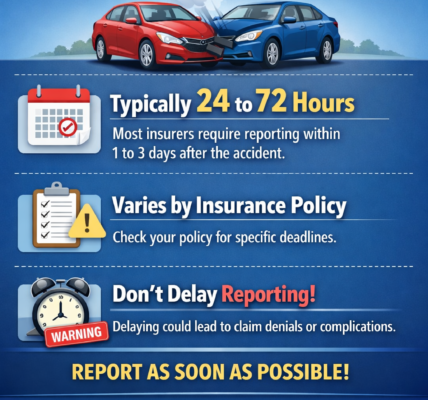
These are general deadlines for filing a personal injury lawsuit (not insurance reporting deadlines). Insurance companies may also have separate reporting requirements, which can differ from court filing deadlines.
| State | General Personal Injury Deadline |
|---|---|
| California | 2 years |
| Texas | 2 years |
| Florida | 2 years (recent changes may apply) |
| New York | 3 years |
| Illinois | 2 years |
| Georgia | 2 years |
| Arizona | 2 years |
| Michigan | 3 years |
| North Carolina | 3 years |
| Ohio | 2 years |
| Tennessee | 1 year |
| Kentucky | 2 years |
Some states have shorter deadlines, while others may allow longer periods under specific circumstances. Because laws can change, individuals should verify current statutes through official state resources or licensed legal professionals.
When Does the Clock Start Running?
In most car accident cases, the statute of limitations begins on the date the accident occurred. This is commonly referred to as the “date of injury.”
However, some states recognize variations, including:
The Discovery Rule
In certain cases, if an injury is not immediately apparent, the statute may begin when the injury is reasonably discovered. This rule typically applies in limited or complex circumstances and varies by jurisdiction.
Minors
If the injured party is under the age of 18, some states pause (or “toll”) the statute of limitations until the individual reaches adulthood. The rules surrounding minors differ significantly by state.
Incapacity
If an injured individual is legally incapacitated at the time of the accident, certain states may allow limited extensions. These exceptions are narrowly applied.
Special Considerations for Government Claims
Claims involving government entities—such as city vehicles, county vehicles, or state-operated vehicles—often involve different procedural requirements.
Many states require a formal notice of claim to be filed within a short period, sometimes as brief as 30 to 180 days after the accident. These notice requirements are separate from the standard statute of limitations.
Because government-related deadlines can be significantly shorter and more complex, individuals involved in such cases often seek prompt clarification regarding applicable procedures.
Insurance Claims vs. Lawsuits
It is important to distinguish between filing an insurance claim and filing a lawsuit.
-
An insurance claim is typically initiated shortly after the accident and is governed by policy terms and reporting requirements.
-
A lawsuit is a formal court proceeding and is governed by statutory deadlines.
Insurance negotiations may continue for months. However, if settlement discussions do not result in a resolution before the statute of limitations expires, filing a lawsuit may no longer be possible.
Understanding this distinction helps individuals evaluate timing considerations within the broader claims process.
For broader context on how timing fits into the overall claims process, you may also find these guides helpful:
Property Damage vs. Personal Injury Deadlines
In some states, the statute of limitations for property damage claims (such as vehicle repair or replacement) may differ from the deadline for personal injury lawsuits. While many states apply similar timeframes to both types of claims, others establish separate filing periods depending on the nature of the damages being sought. Because these distinctions vary by jurisdiction, individuals should confirm whether different deadlines apply to bodily injury and vehicle damage claims in their state.

What Happens If the Deadline Passes?
If the statute of limitations expires before a lawsuit is filed:
-
The defendant may raise the expired deadline as a legal defense
-
The court may dismiss the case
-
Settlement leverage may be reduced
-
Legal recovery options may become unavailable
Courts typically apply statutes of limitations strictly, even when settlement discussions were ongoing.
Practical Steps for Monitoring Deadlines
While this article does not provide legal advice, general administrative awareness can be helpful. Individuals involved in a car accident may consider:
-
Recording the accident date clearly
-
Maintaining copies of medical documentation
-
Keeping records of insurance communications
-
Monitoring the passage of time during negotiations
-
Confirming applicable state deadlines when appropriate
Timely awareness reduces the risk of overlooking procedural requirements.
Why Laws Vary by State
Statutes of limitations differ across states because civil law is primarily governed at the state level. Legislatures periodically revise deadlines in response to policy considerations, court decisions, and public interest factors.
As a result, information found online may become outdated over time. Consulting current state statutes or licensed professionals ensures the most accurate understanding of applicable deadlines.
Final Reminder
Because statutes of limitations are jurisdiction-specific and subject to change, readers should verify the current deadline applicable in their state through official sources or a licensed attorney. We aim to review and update this overview periodically, but confirmation of current statutes is recommended before relying on any general timeframe.
Last reviewed for general informational accuracy: February 2026
Author