
This article is provided for general informational and educational purposes only and does not constitute legal advice. Laws, insurance requirements, and fault-determination rules vary by jurisdiction and individual circumstances. Readers should consult a licensed attorney or other qualified professional for guidance specific to their situation.
Introduction
After a car accident, many people expect fault to be determined quickly. In straightforward collisions involving clear physical evidence and consistent accounts, liability decisions may be reached relatively fast. However, in other situations, fault determination can take weeks.
When liability decisions are delayed, the cause is often not indecision but rather the evidence review process. Insurance companies must gather, verify, and analyze multiple forms of documentation before allocating responsibility. This review process can involve several layers of evaluation, particularly when the facts are incomplete or conflicting.
Understanding how evidence is reviewed may help clarify why fault determinations sometimes require additional time.

The Role of Evidence in Fault Determination
Insurance companies do not rely on a single piece of information to assign fault. Instead, they typically evaluate a combination of:
-
Police reports
-
Driver statements
-
Witness statements
-
Photographs and video footage
-
Vehicle damage patterns
-
Road and traffic conditions
-
Applicable traffic laws
Each source may provide partial insight. The review process involves assessing how these pieces fit together in a coherent factual framework.
When the evidence aligns clearly, fault decisions may be reached quickly. When inconsistencies appear, further review is often required.
1. Collection of Initial Documentation
The first step in fault determination is gathering documentation.
This can include:
-
Official accident reports
-
Statements from involved drivers
-
Witness contact information
-
Photographs taken at the scene
-
Insurance policy information
Obtaining these materials may take time. Police reports, for example, are not always available immediately after a collision. Depending on the jurisdiction, official reports may take days or weeks to finalize.
Until the report is available, insurers may delay final liability conclusions.
2. Reviewing Police Reports
Police reports often provide:
-
Diagrammed accident scenes
-
Officer observations
-
Preliminary fault assessments
-
Citations issued
However, police reports are not automatically binding in civil insurance evaluations. Insurers typically review the report alongside other evidence.
If the report contains ambiguities, conflicting accounts, or lacks a definitive conclusion, the insurer may need additional clarification before proceeding.
3. Comparing Driver Statements
Driver statements are central to the review process. When accounts are consistent, liability decisions may be straightforward. However, when statements conflict, insurers must analyze:
-
Timing of events
-
Speed estimates
-
Traffic signal sequencing
-
Lane positioning
-
Environmental factors
Adjusters compare each statement against physical evidence and applicable traffic laws. This comparison requires careful review, particularly if both drivers assert compliance with traffic rules.
Resolving discrepancies can extend the evaluation timeline.
4. Witness Interviews
Independent witnesses may provide valuable context, but contacting and interviewing them can take time.
Delays may occur when:
-
Witnesses are difficult to reach
-
Contact information is incomplete
-
Statements conflict with other evidence
Insurers typically attempt to corroborate witness accounts before relying on them in liability determinations.
5. Physical Evidence Analysis
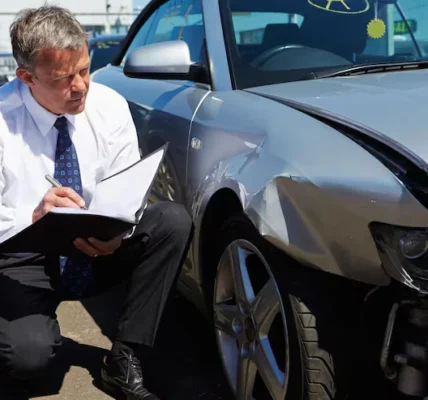
Vehicle damage patterns often provide important clues about collision dynamics.
Adjusters may examine:
-
Point of impact
-
Direction of force
-
Extent of structural damage
-
Airbag deployment
-
Paint transfer
In some cases, insurers consult accident reconstruction specialists to interpret physical evidence. Reconstruction analysis may be particularly relevant in:
-
Multi-vehicle collisions
-
High-speed impacts
-
Intersection crashes
-
Disputed lane-change accidents
Specialist review can add time but may be necessary to clarify causation.
Read: Insurance Adjusters & Claims

6. Reviewing Video or Digital Evidence
Dashcams, traffic cameras, and surveillance systems sometimes capture collisions. While video evidence can clarify events, obtaining and reviewing footage may require:
-
Requests to property owners
-
Coordination with law enforcement
-
Technical review of digital files
If footage exists but is not immediately accessible, fault determination may pause pending review.
7. Multi-Vehicle and Chain-Reaction Collisions
Accidents involving multiple vehicles often require more complex analysis.
In chain-reaction scenarios, insurers must determine:
-
Sequence of impacts
-
Initial point of contact
-
Secondary collisions
-
Contributing driver actions
Multiple insurers may coordinate their investigations, which can extend timelines. Each carrier conducts its own review before agreeing on liability allocation.
8. State Law Considerations
Fault determination is influenced by state negligence standards.
States may apply:
-
Pure comparative negligence
-
Modified comparative negligence
-
Contributory negligence
In comparative systems, insurers may assign percentage allocations of responsibility. Determining those percentages often requires detailed analysis rather than a simple yes-or-no conclusion.
Legal standards must be applied consistently to the facts, which may require supervisory or legal department review.
9. Internal Quality Control and Supervisory Review
Before finalizing liability decisions, insurers often conduct internal quality checks.
These reviews may involve:
-
Supervisor approval
-
Compliance verification
-
Documentation completeness checks
Quality control ensures that fault determinations align with company standards and regulatory requirements. While this process promotes accuracy, it can extend timelines.
10. Conflicting Evidence
When evidence conflicts—such as when physical damage patterns do not align with driver accounts—additional investigation may be necessary.
Adjusters may:
-
Re-contact drivers for clarification
-
Request supplemental photographs
-
Review repair estimates
-
Analyze event data recorder (EDR) information
Reconciling inconsistencies is often one of the most time-consuming aspects of liability review.
11. Event Data Recorder (EDR) Analysis
Some vehicles contain electronic data recorders that capture limited pre-collision information, such as:
-
Speed
-
Braking
-
Seatbelt status
Accessing and interpreting EDR data may require specialized tools and consent procedures. If EDR analysis is relevant, the process may extend fault determination timelines.
12. Why Thorough Review Matters
While waiting for a liability decision can be frustrating, thorough evidence review serves several purposes:
-
Promotes factual accuracy
-
Reduces incorrect fault assignments
-
Supports consistent application of state law
-
Minimizes disputes between insurers
Rushed determinations may lead to incorrect allocations, which can complicate claims resolution later.
The goal of extended review is typically accuracy rather than delay.
Read: What Triggers a Car Accident Claim to Be Sent for Further Review?

Common Misconceptions About Fault Delays
Misconception: A delay means fault cannot be determined.
In many cases, the delay reflects evidence gathering rather than uncertainty.
Misconception: Police reports alone determine liability.
Police reports are considered but are not the sole deciding factor in insurance evaluations.
Misconception: Longer review indicates denial.
Fault determination and claim approval are separate processes. A longer review does not automatically indicate rejection.
Conclusion
Fault determination may take weeks when insurers must collect, verify, and analyze multiple forms of evidence. Delays often arise from documentation availability, conflicting accounts, multi-vehicle involvement, digital evidence review, or application of state negligence standards.
Although extended review can be inconvenient, it is generally intended to ensure accurate and consistent liability decisions. Each case depends on its specific facts, available evidence, and jurisdictional rules.
For guidance tailored to a particular situation, consultation with licensed professionals may be appropriate