
This article provides general educational information only and does not constitute legal or medical advice. Laws, insurance practices, and individual circumstances vary by jurisdiction. Readers should consult licensed medical or legal professionals for guidance specific to their situation.
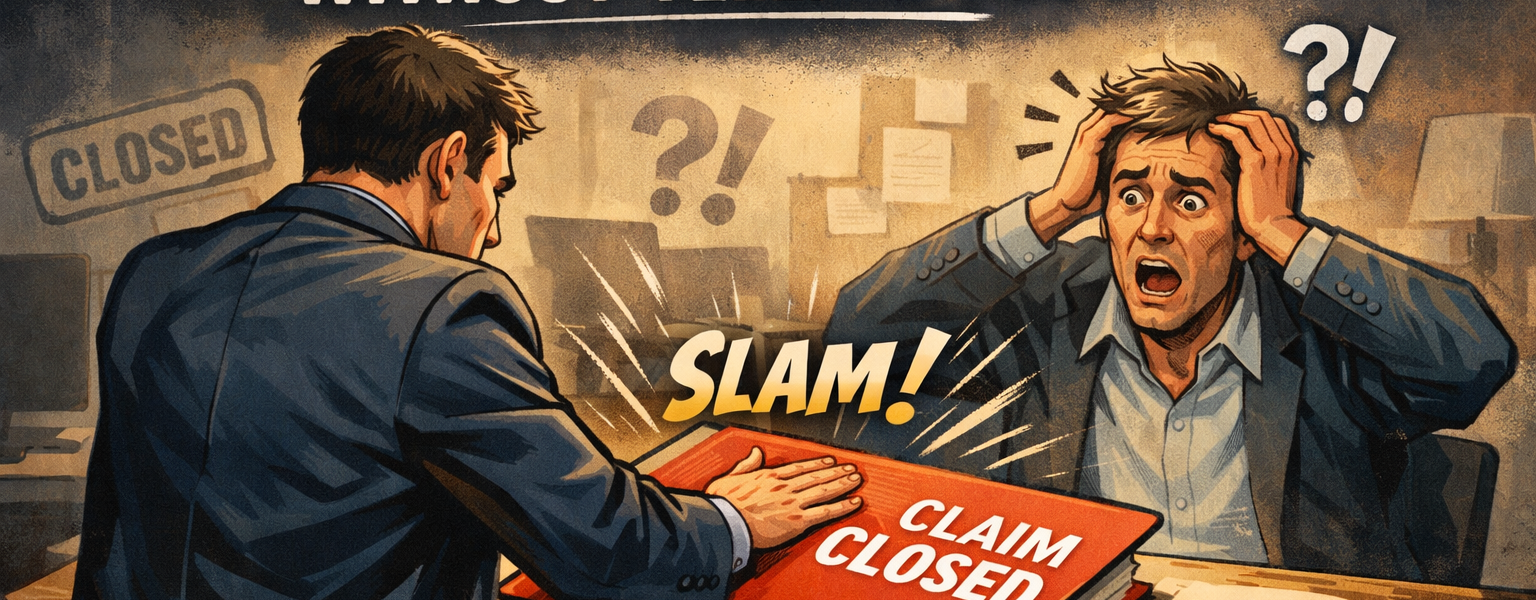
It’s a fair concern. You file a claim, maybe speak with an adjuster once or twice, and then communication slows down. You start wondering: Can the insurance company just close my claim without telling me?
In most situations, insurance companies are expected to notify you if a claim is denied or formally closed. However, there are circumstances where a claim may be marked inactive or administratively closed if there has been little activity — and that can feel like it happened “without notice.”
Here’s how it generally works and what you should know.
How Long Does It Take to Get a Car Repaired After Insurance Approval?

The Short Answer
Insurance companies are generally required to communicate important claim decisions, including:
-
Claim denials
-
Settlement offers
-
Final payments
-
Coverage determinations
However, a claim may be closed internally for administrative reasons if:
-
You stop responding to requests
-
Required documentation is never provided
-
The insurer receives no further communication
-
The statute of limitations is approaching
That doesn’t necessarily mean your rights disappear — but it can affect how the claim proceeds.
What Does “Closing a Claim” Actually Mean?
There are different types of claim closures:
1. Paid and Closed
This means the insurer:
-
Approved coverage
-
Issued payment
-
Marked the file complete
You should receive documentation showing payment and closure.
2. Denied and Closed
If the insurer determines the loss is not covered, they typically issue a written denial explaining the reason. The claim is then closed.
In most states, insurers must provide written notice when denying coverage.
3. Closed for Inactivity
If weeks or months pass without communication — for example, if the insurer requested documents and received no response — they may close the claim administratively.
This is often labeled:
-
“Closed pending information”
-
“Closed for lack of cooperation”
-
“Inactive file”
In many cases, these claims can be reopened if you provide the requested information.
Are Insurers Required to Notify You?
Insurance companies are regulated at the state level, and most states require insurers to:
-
Acknowledge claims promptly
-
Investigate within reasonable timeframes
-
Provide written explanations for denials
For final decisions like denials, written notice is typically required.
However, if a claim is closed due to inactivity and no formal denial was issued, notification may vary depending on company policy and state law.
If you have moved, changed phone numbers, or missed emails, it’s possible a notice was sent but not received.
Common Reasons a Claim Might Be Closed
Lack of Response
If an adjuster repeatedly requests:
-
Recorded statements
-
Medical records
-
Repair estimates
-
Proof of ownership
And receives no reply, the file may be closed after a period of time.
Incomplete Documentation
If key documents are never submitted, the insurer may be unable to complete the investigation.
Settlement Offer Expired
In some cases, insurers issue a settlement offer with a deadline. If there is no response, they may close the file until further communication is received.
Coverage Determination Completed
If the insurer determines there is no coverage under the policy, they will typically close the claim after issuing a denial letter.
Does Insurance Pay Medical Bills Directly After an Accident?

Can a Closed Claim Be Reopened?
Often, yes.
If a claim was closed for inactivity or pending documentation, it may be reopened if you:
-
Contact the insurer
-
Provide missing documents
-
Respond to prior requests
However, reopening depends on:
-
How much time has passed
-
Whether legal deadlines (statutes of limitations) have expired
-
Whether the policy was active at the time of the loss
If a claim was denied and closed, reopening may require additional documentation or formal dispute processes.
What If You Disagree With the Closure?
If you believe your claim was closed improperly:
-
Contact the adjuster and request clarification in writing.
-
Ask for the specific reason for closure.
-
Request a copy of the claim file notes if appropriate.
-
Escalate to a supervisor if needed.
-
File a complaint with your state’s department of insurance if you believe procedures were not followed.
Insurance companies are required to handle claims in good faith and follow regulatory standards.
What About Liability Claims With the Other Driver’s Insurer?
If you filed a claim with the at-fault driver’s insurance company, similar principles apply. They may close a claim if:
-
Fault cannot be established
-
You stop responding
-
You do not pursue treatment or damages
-
The statute of limitations approaches
However, they should communicate significant decisions like liability denial in writing.
Does Closing a Claim Mean You Lose Your Rights?
Not automatically.
A claim closure does not erase:
-
Your right to reopen within policy terms
-
Your right to dispute a denial
-
Your right to pursue legal action within the statute of limitations
However, time matters. If you wait too long, legal deadlines may prevent further action.
Signs Your Claim May Be at Risk of Closing
-
You haven’t responded to adjuster emails or calls.
-
You haven’t submitted requested documents.
-
You haven’t sought medical treatment in months.
-
The adjuster mentioned needing additional information and you didn’t provide it.
If communication has stopped, it’s wise to check the claim status directly.
How to Protect Your Claim From Being Closed
-
Respond promptly to adjuster requests.
-
Keep copies of all correspondence.
-
Provide requested documentation in writing.
-
Confirm receipt of important submissions.
-
Follow up if you haven’t heard back in a reasonable timeframe.
Clear communication prevents misunderstandings.
Can You Switch Insurance Companies During an Open Claim?

Final Thoughts
In most situations, insurance companies do not close claims secretly or without communication. Significant decisions — such as denials or final payments — are typically accompanied by written notice.
However, claims can be administratively closed for inactivity or missing documentation if communication stops. That type of closure may not always feel formal, but it can happen.
If you’re unsure about the status of your claim, the safest step is to contact the insurer directly and request a written update. Staying engaged and responsive greatly reduces the chance of an unexpected closure.