
This article provides general educational information only and does not constitute legal or medical advice. Laws, insurance practices, and individual circumstances vary by jurisdiction. Readers should consult licensed medical or legal professionals for guidance specific to their situation.
It’s a question many people quietly wonder after filing a claim: Will the insurance company look at my social media?
The short answer is yes — in some cases, insurance adjusters or investigators may review publicly available social media content as part of a claim investigation. It doesn’t happen in every claim, and it isn’t automatic. But it can happen, particularly when injuries or liability are disputed.
Understanding how and why social media might be reviewed can help you avoid unnecessary complications during your claim.
How Long Do You Have to Report a Car Accident to Insurance?

Why Would an Insurance Company Look at Social Media?
Insurance claims are evaluated based on documentation and consistency. Adjusters review:
-
Police reports
-
Photographs of the scene
-
Vehicle damage estimates
-
Medical records
-
Recorded statements
Social media is sometimes viewed as an additional source of publicly available information.
The main reasons insurers may check social media include:
1. Verifying Injury Claims
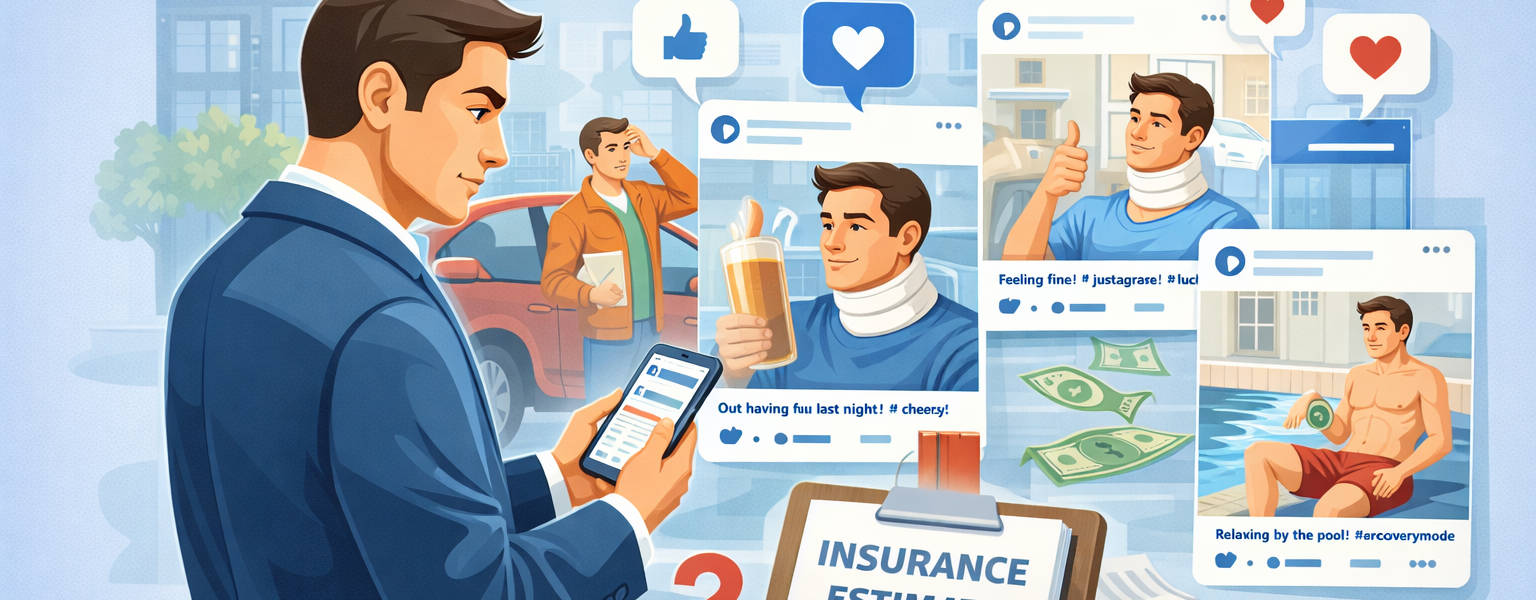
If a claim involves physical injuries, insurers want to understand the extent of those injuries. Public posts that appear inconsistent with reported injuries may raise questions.
For example, if someone claims severe mobility limitations but posts public photos engaging in strenuous physical activity shortly afterward, an adjuster may note that discrepancy.
This does not automatically mean fraud — but insurers are trained to examine consistency.
2. Clarifying Accident Details
Occasionally, people post about accidents on social media. A public post describing how the crash happened could be reviewed if liability is disputed.
Adjusters may compare those statements to official reports and recorded interviews.
3. Assessing Timeline
Injury claims often depend on the timing of treatment and symptom development. Public posts can sometimes provide timestamps or contextual details about activities after the accident.
Again, this is typically relevant only in more complex or contested claims.
Do They Check Every Claim?
No. Most straightforward property damage claims do not involve extensive social media review.
Minor fender-benders, clear liability cases, and routine repair claims are usually processed without deep investigation. Social media review is more likely in cases involving:
-
Significant injury claims
-
High-value settlements
-
Disputed liability
-
Suspected inconsistencies
-
Litigation
In larger claims, insurers may assign a special investigations unit (SIU) or outside investigator. In those cases, broader background research — including public online activity — is more common.
Can Insurance Companies Access Private Accounts?
Insurance adjusters do not have special access to private accounts. They cannot legally “hack” your social media or bypass privacy settings.
They may review:
-
Public posts
-
Public photos
-
Public comments
-
Tagged posts visible to the public
If your account is private, adjusters generally cannot see private content unless someone with access shares it. However, in litigation situations, courts may allow broader discovery under specific legal rules.
What About Being Tagged in Someone Else’s Post?
Even if your account is private, you may appear in photos or posts shared publicly by friends or family members. Tagged content can sometimes be visible depending on privacy settings.
This is why attorneys often advise people involved in serious claims to be mindful not only of what they post — but also of what others post about them.
Can Social Media Affect a Claim?
It can — but only in certain situations.
Insurance companies evaluate the totality of evidence. A single photo or post rarely determines the outcome of a claim by itself. However, content that contradicts documented injuries or statements may:
-
Prompt additional investigation
-
Delay settlement discussions
-
Lead to follow-up questions
-
Be referenced in negotiations
For example, if someone reports they cannot lift heavy objects due to injury but posts a public video lifting weights days later, the insurer may question the severity of the injury claim.
Context matters. A short video clip does not always reflect a person’s overall condition. But insurers look for consistency between claims and observable activity.
What About Deleting Posts?
It may be tempting to delete posts after filing a claim. However, intentionally deleting content after a claim has begun — especially if litigation is possible — can create legal complications.
If a claim escalates to a lawsuit, courts may require preservation of relevant evidence. Deleting content in that situation could be viewed negatively.
The safest approach is not to post questionable content in the first place rather than attempting to remove it later.
Should You Stop Using Social Media After an Accident?
For minor claims involving only vehicle repairs, most people continue using social media normally without issue.
In more serious injury cases, some people choose to limit public posting until the claim is resolved. This is a personal decision and may depend on the complexity of the case.
If injuries are significant or fault is heavily disputed, some individuals seek legal advice about best practices regarding online activity.
What Happens If Both Drivers Claim No Fault After an Accident?

Common Misconceptions
“They Check Everyone’s Facebook Automatically.”
Not typically. Routine claims usually move through standard review processes without deep online investigation.
“One Vacation Photo Will Destroy My Case.”
Not necessarily. Claims are evaluated based on medical documentation, repair estimates, and official reports. A single post rarely outweighs substantial documented evidence.
“Private Means Completely Hidden.”
Privacy settings help limit visibility, but tagged content and shared posts can sometimes still be accessible depending on platform settings.
Practical Tips During an Open Claim
If you have an open accident claim, consider these practical guidelines:
-
Avoid discussing accident details publicly.
-
Avoid speculating about fault online.
-
Be mindful of photos or videos that could be misunderstood.
-
Review your privacy settings if you are concerned.
-
Continue to focus on accurate documentation of your claim.
These are general precautions — not signs that something is wrong.
How Long Does It Take to Get a Car Repaired After Insurance Approval?

Final Thoughts
Yes, insurance adjusters may check publicly available social media content after an accident, especially in injury or disputed claims. It is not automatic in every case, and it does not mean your claim is under suspicion.
Most routine property damage claims proceed without any social media review. However, in higher-value or contested cases, insurers sometimes examine publicly available information to verify consistency with reported facts.
The best approach is simple: provide accurate information, document your claim thoroughly, and be mindful that public posts can sometimes be viewed out of context.
If your situation involves significant injuries or legal complexity, understanding how online activity may be interpreted can help you navigate the process more confidently.