
This article provides general educational information only and does not constitute legal or medical advice. Laws, insurance practices, and individual circumstances vary by jurisdiction. Readers should consult licensed medical or legal professionals for guidance specific to their situation.
If you’ve recently filed a car insurance claim after an accident, you may have noticed something right away when you called the insurance company: a recorded message saying, “This call may be recorded for quality and training purposes.”
That often leads to an understandable question — Are they really recording this? And if they are, what does that mean for your claim?
The short answer is yes, insurance companies frequently record phone calls related to accident claims. It’s a common industry practice. But understanding why they record calls, how those recordings are used, and what your rights are can help you feel more confident during the claims process.
Below is a detailed explanation of how call recording works in accident claims and what you should know before speaking with an adjuster.
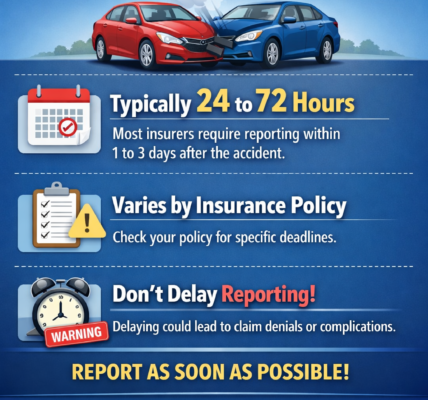
How Long Do You Have to Report a Car Accident to Insurance?

Why Insurance Companies Record Calls
Insurance companies handle thousands of claims every day. Recording phone calls serves several practical purposes.
1. Documentation
Accident claims depend heavily on details — dates, times, road conditions, weather, injuries, and vehicle damage. A recorded call creates a permanent record of what was said. This helps prevent misunderstandings and ensures that the adjuster accurately documents your statement.
If there is later confusion about what information was provided, the recording allows the company to review the conversation.
2. Accuracy and Quality Control
Insurance companies are regulated businesses. They must follow state laws regarding claim handling, communication timelines, and fair practices. Recorded calls allow supervisors to review whether adjusters are following procedures properly.
This is one reason you often hear the phrase “for quality assurance purposes.” It’s not just a script — companies genuinely use recordings for internal review and compliance.
3. Dispute Resolution
If a disagreement arises later about what was discussed — for example, whether certain information was disclosed — the recording provides a reference point.
This protects both the insurer and the policyholder. It can clarify misunderstandings and reduce disputes over “who said what.”
4. Fraud Prevention
Unfortunately, insurance fraud does occur. Recorded calls can be compared with written statements, police reports, repair estimates, and medical documentation to ensure consistency.
Inconsistencies don’t automatically mean fraud, but insurers are trained to verify information carefully.
Are All Insurance Calls Recorded?
Most major insurance companies record inbound and outbound claim-related calls automatically. However, there are generally two types of recorded interactions:
Routine Service Calls
These include general updates, billing questions, scheduling inspections, and standard claim discussions. These calls are commonly recorded by default.
Formal Recorded Statements
Sometimes an adjuster will ask to take a “recorded statement” about the accident. This is more detailed and structured than a normal phone conversation. During a recorded statement, the adjuster may ask about:
-
How the accident happened
-
Traffic signals or road conditions
-
Vehicle speed and positioning
-
Injuries or medical treatment
-
Whether you’ve had prior accidents
These statements are typically more thorough and may be used during liability evaluation.
What Happens If Both Drivers Claim No Fault After an Accident?

Do They Have to Tell You?
Whether the company must notify you depends on state law.
In the United States, states generally follow one of two types of recording laws:
One-Party Consent States
Only one person in the conversation needs to consent to recording. In these states, the insurance company’s consent may be legally sufficient.
All-Party Consent States
All parties involved in the conversation must be informed and consent to recording.
To avoid legal issues, most insurers choose to announce that calls “may be recorded,” regardless of the state you’re in.
If you hear a recording disclosure at the beginning of the call, you should assume the conversation is being recorded.
How Are Recorded Calls Used in a Claim?
Recorded conversations can influence how a claim is evaluated, especially when fault or injury is involved.
For example:
-
If you describe the accident one way during the first call and later provide a different version, the adjuster may compare statements.
-
If you say you were not injured immediately after the crash but later seek medical treatment, the insurer may ask follow-up questions.
This does not mean your claim will automatically be denied. It simply means consistency matters.
That’s why it’s important to provide accurate information and avoid guessing if you’re unsure about details.
Do You Have to Give a Recorded Statement?
This depends on whose insurer is asking.
Your Own Insurance Company
Most insurance policies include a “cooperation clause.” This requires you to cooperate with your insurer’s investigation. Refusing to provide reasonable information could potentially affect your claim.
The Other Driver’s Insurance Company
You are generally not required to give a recorded statement to the other driver’s insurer. You can choose to communicate in writing or decline to provide a recorded interview.
If injuries are serious or fault is disputed, some people prefer to seek legal advice before giving detailed recorded statements to the opposing insurer.
Should You Be Concerned?
In most routine property damage claims, recorded calls are simply part of normal business operations. Millions of claims are processed every year, and recording helps insurers handle them efficiently.
However, it’s still wise to approach conversations carefully:
-
Stick to facts you know.
-
Avoid speculating about speed, fault, or injuries if you’re unsure.
-
If you don’t know the answer to a question, it’s okay to say you don’t know.
-
Review any written statements before signing them.
You don’t need to be overly cautious or anxious — just thoughtful and clear.
How Long Do Insurers Keep Recordings?
Retention policies vary, but claim-related recordings are often kept for several years. If a claim results in litigation, recordings may be preserved as part of the claim file.
The exact duration depends on company policy and regulatory requirements.
What If You’re Uncomfortable Being Recorded?
If you’re uncomfortable during a call:
-
You can ask if the call is being recorded.
-
You can request written communication instead.
-
You can schedule a call for later if you need time to gather information.
If the matter is complex — especially involving injuries or significant financial loss — some people choose to consult with a professional before giving detailed statements.
Common Misunderstandings
“They’re Recording Me Because I’m in Trouble.”
Recording is standard practice. It does not automatically mean your claim is under suspicion.
“If I Misspeak Once, My Claim Is Over.”
Claims are evaluated based on the totality of evidence — police reports, photos, repair estimates, medical documentation, and more. One minor wording issue does not automatically determine the outcome.
“They Can’t Use What I Say.”
Statements provided during recorded calls can be part of the claim file. That’s why accuracy matters.
Can Insurance Close a Claim Without Telling You?

Final Thoughts
Yes, insurance companies commonly record phone calls after an accident claim. It’s a routine part of modern claims handling, used for documentation, accuracy, compliance, and dispute resolution.
For most people, this process is straightforward and uneventful. The key is to remain calm, provide accurate information, and avoid guessing about details you’re unsure of.
If your claim involves only minor vehicle damage, recorded calls are simply part of the administrative process. If your claim involves injuries or disputed fault, understanding how recorded statements are used can help you approach conversations with greater awareness.
Ultimately, recorded calls are not designed to intimidate policyholders. They exist to create a clear record of communication — something that benefits both sides when handled thoughtfully.