
This article is provided for general informational and educational purposes only and does not constitute legal advice. Laws, insurance requirements, and fault-determination rules vary by jurisdiction and individual circumstances. Readers should consult a licensed attorney or other qualified professional for guidance specific to their situation.
Introduction
Photographs are commonly reviewed in car accident insurance claims. Visual documentation can assist insurers in understanding vehicle damage, accident scene conditions, and certain contextual factors related to a collision.
However, photographs are typically not evaluated in isolation. Instead, insurance companies analyze images as one component within a broader documentation review process that may include police reports, statements, repair estimates, and medical records.
This article explains how insurance companies generally use photographs during claim evaluation, focusing on the procedural aspects of review.
Read: Insurance Adjusters & Negotiations
The Role of Photographs in the Claims Process
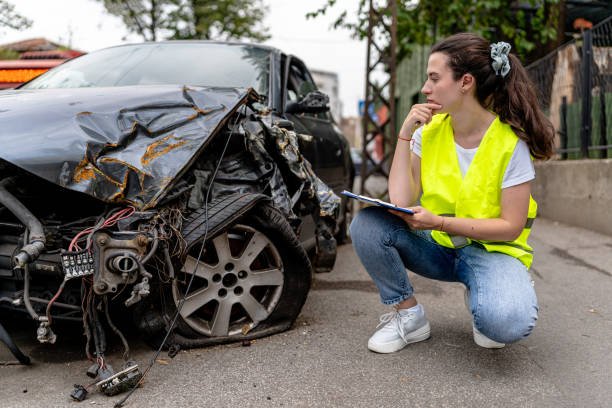
Insurance companies rely on documentation to assess reported losses. Photographs serve as visual evidence that may help:
-
Confirm the existence of damage
-
Identify visible impact locations
-
Provide context regarding the accident scene
-
Supplement written descriptions
Photographs are typically reviewed alongside other materials rather than as standalone proof of liability or damages.
1. Confirming Vehicle Damage
One of the primary uses of photographs is to verify reported vehicle damage.
Adjusters may review images to:
-
Identify the location of impact
-
Assess visible structural damage
-
Observe paint transfer or debris
-
Compare damage patterns between vehicles
Photographs can help determine whether the reported damage is consistent with the description of the collision. They may also assist in determining whether further inspection is necessary.
2. Supporting Repair Estimates
When repair estimates are submitted, insurers often compare the written estimate with photographic documentation.
This comparison may involve:
-
Matching listed repair areas to visible damage
-
Confirming severity of exterior damage
-
Reviewing whether damage appears recent
In some cases, photographs are sufficient for initial property damage review. In others, insurers may request in-person inspection if the images do not provide adequate detail.
3. Evaluating the Accident Scene
Images taken at the scene may show:
-
Vehicle positions after impact
-
Traffic signals or signage
-
Road markings
-
Weather conditions
-
Lighting conditions
These images can provide environmental context. For example, road layout or signage may help clarify traffic flow patterns at the time of the collision.
Scene photographs are generally reviewed in combination with police reports and driver statements.
4. Assessing Impact Direction and Collision Dynamics
Photographs of vehicle damage sometimes provide insight into impact direction.
Adjusters may examine:
-
Angle of damage
-
Height of impact
-
Deformation patterns
-
Airbag deployment indicators
These observations may help insurers understand how the vehicles interacted during the collision. However, damage interpretation often requires comparison with repair assessments or, in more complex cases, specialist analysis.
5. Reviewing Interior and Supplemental Damage
In addition to exterior damage, insurers may review photographs showing:
-
Interior damage
-
Airbag deployment
-
Broken glass
-
Damage to cargo areas
These images can help verify the scope of reported property loss.
6. Identifying Pre-Existing Damage
Photographs may assist in distinguishing between damage associated with the current accident and damage that may have existed previously.
Adjusters may review:
-
Rust patterns
-
Paint aging
-
Mismatched panels
-
Prior repair indications
This comparison is typically conducted carefully and in context with prior claim history, when available.
7. Reviewing Injury-Related Documentation
In some cases, photographs may include visible injuries, such as bruising or lacerations. When such images are submitted, insurers typically evaluate them as supplemental documentation rather than as medical evidence.
Medical records remain the primary documentation for injury claims. Photographs, when included, may serve as contextual support rather than diagnostic evidence.

8. Digital Metadata and Timestamp Review
Photographs often contain embedded metadata, including:
-
Date and time stamps
-
Device information
-
Location data (if enabled)
Insurers may review metadata to confirm when images were captured. This helps ensure that the photographs correspond to the reported accident timeframe.
9. Fraud Detection and Consistency Review
Insurance companies use photographs as part of routine consistency checks.
This review may include:
-
Comparing damage patterns to reported accident descriptions
-
Verifying that images match vehicle identification details
-
Confirming that images correspond to the reported location
Such review is generally part of standard documentation verification procedures.
10. When Additional Inspection Is Requested
If photographs do not provide sufficient clarity, insurers may request:
-
Additional images
-
Higher-resolution photos
-
In-person inspection
-
Appraisal review
Photographs serve as an initial visual reference, but they do not replace physical inspection when needed.
Limitations of Photographic Evidence
While photographs can be helpful, they have limitations.
Images may not fully capture:
-
Internal structural damage
-
Mechanical system impairment
-
Frame misalignment
-
Underbody damage
Because of these limitations, insurers often rely on professional repair assessments in addition to photographic documentation.
How Photographs Fit Within the Overall Review Process
Photographs are typically evaluated in coordination with:
-
Accident reports
-
Driver and witness statements
-
Repair estimates
-
Policy documentation
-
Medical records (if applicable)
The goal of review is to assess consistency across all forms of documentation. Photographs help visualize reported damage but are not generally the sole determining factor in liability or settlement decisions.
Why Photographic Review May Take Time
Although photographs are digital and often submitted quickly, review timelines may vary due to:
-
Volume of images submitted
-
Need for clarification
-
Coordination between adjusters and appraisers
-
Technical image quality concerns
In some cases, additional documentation may be required before evaluation can be completed.
Read: What Evidence is Commonly Reviewed after a Crash Claim?

Conclusion
Insurance companies use photographs as part of a broader evidence review process in car accident claims. Images may assist in confirming vehicle damage, supporting repair estimates, providing scene context, and verifying documentation consistency.
However, photographs are typically evaluated alongside other forms of evidence rather than in isolation. Their purpose within the claims process is to support factual understanding and documentation accuracy.
Because claim handling procedures vary by insurer, policy terms, and jurisdiction, the specific use of photographic evidence may differ between cases. For guidance tailored to individual circumstances, consultation with licensed professionals may be appropriate.