
This article provides general educational information only and does not constitute legal or medical advice. Laws, insurance practices, and individual circumstances vary by jurisdiction. Readers should consult licensed medical or legal professionals for guidance specific to their situation.
After a car accident, there’s often confusion about deadlines. Some people assume they have months to notify their insurer. Others believe they must report it immediately or lose coverage.
The truth is somewhere in between.
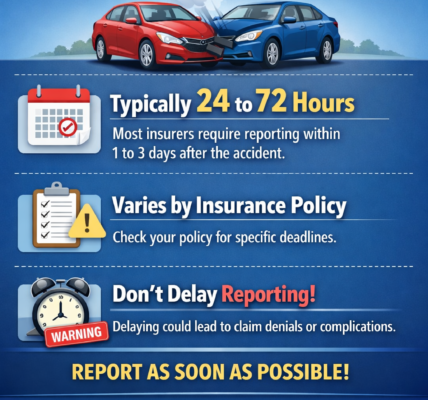
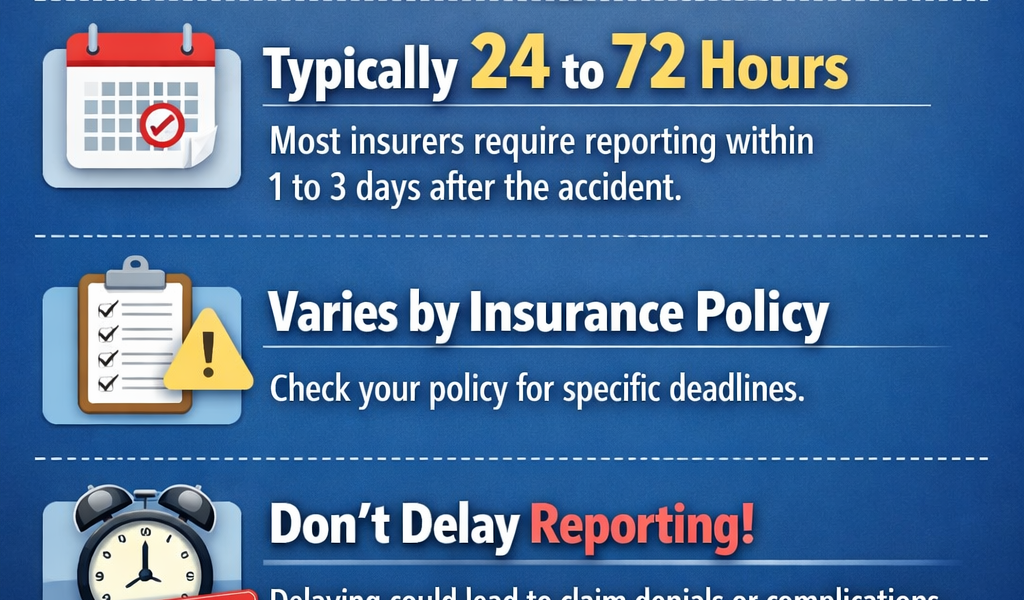
Most auto insurance policies require you to report an accident “promptly” or “within a reasonable time.” That wording may sound vague, but it has real implications. While there is usually no fixed 24-hour rule written into the policy, waiting too long can complicate — or even jeopardize — your claim.
Here’s how reporting timelines generally work and what you should know.
What Happens If Both Drivers Claim No Fault After an Accident?

What Your Insurance Policy Likely Says
Nearly all auto insurance policies include a section called “Duties After an Accident” or something similar. This section typically requires you to:
-
Notify the insurer promptly
-
Provide details about the accident
-
Cooperate with any investigation
The word “promptly” does not always mean the same day. But it does mean you should notify the insurer as soon as reasonably possible under the circumstances.
What “Promptly” Usually Means in Practice
Although policies vary, here are general guidelines:
-
Same day or within 24 hours: Ideal in most situations
-
Within a few days: Usually acceptable
-
Within 1–2 weeks: Often still acceptable if there’s a reasonable explanation
-
After several weeks or months: May create problems
The longer you wait, the greater the chance the insurer could argue that the delay affected their ability to investigate.
Why Timely Reporting Matters
Insurance companies need to:
-
Inspect vehicle damage
-
Collect statements
-
Review the scene (if possible)
-
Contact witnesses
-
Preserve evidence
If you wait too long:
-
Physical evidence may disappear
-
Witness memories may fade
-
Damage may worsen
-
The other driver may report first
Late reporting can complicate liability decisions.
Does It Matter If It Was a Minor Accident?
Some drivers delay reporting minor fender-benders because they think:
-
Damage is small
-
The other driver said they won’t file a claim
-
They plan to pay out of pocket
However, problems can arise later if:
-
Hidden damage is discovered
-
The other driver changes their mind
-
An injury surfaces days later
Even minor accidents are generally safer to report sooner rather than later.
What If You Were Injured?
If injuries are involved, timely reporting becomes even more important.
In some states, certain coverages — like Personal Injury Protection (PIP) — have strict treatment timelines. For example, some no-fault states require medical treatment within a specific number of days to qualify for benefits.
While reporting deadlines and medical treatment deadlines are separate issues, delaying either can create complications.
Can Insurance Close a Claim Without Telling You?

Is There a Legal Deadline?
There are two separate timelines to understand:
1. Insurance Reporting Deadline
This is controlled by your policy language (usually “prompt notice”).
2. Statute of Limitations
This is the legal deadline to file a lawsuit if a claim cannot be resolved. It varies by state, often:
-
2–3 years for personal injury
-
3–6 years for property damage
The statute of limitations does not override your duty to notify your insurer promptly. You can’t wait two years and assume coverage remains unaffected.
What Happens If You Report Late?
Reporting late does not automatically mean your claim will be denied. Insurers typically consider:
-
Why you delayed
-
Whether the delay harmed their investigation
-
Whether evidence is still available
If the delay materially affects their ability to investigate, they may raise coverage concerns.
For example:
-
If you wait months and the vehicle has already been repaired, inspection becomes difficult.
-
If witnesses can’t be located due to delay, liability determination may suffer.
In some cases, insurers may deny a claim if the delay clearly prejudiced their investigation.
What If the Other Driver Files First?
If the other driver reports the accident before you do, your insurer may contact you. Even if you did not initially intend to file a claim, you are still required to cooperate with your insurer’s investigation.
Failing to respond in that situation can create additional complications.
What About Reporting to the Police?
Police reporting requirements are separate from insurance reporting requirements.
Many states require drivers to report accidents to law enforcement if:
-
Injuries occur
-
Damage exceeds a certain dollar amount
-
A vehicle is not drivable
Even if police involvement is not legally required, notifying your insurer is still advisable.
Can You Report Even If You’re Not Sure You’ll File a Claim?
Yes. Reporting an accident does not automatically mean you must pursue payment for repairs. Some drivers notify their insurer “for record purposes” in case issues arise later.
This can protect you if:
-
The other driver later claims injury
-
Additional damage is discovered
-
Liability becomes disputed
Common Questions
Is 24 Hours Required?
Most policies do not specifically require 24-hour reporting, but notifying the insurer within a day or two is strongly recommended.
What If I Was in the Hospital?
Insurers generally understand that serious injuries may delay reporting. In such cases, notification as soon as reasonably possible is usually sufficient.
Can My Claim Be Denied for Waiting a Week?
It depends on the circumstances. A short delay with a reasonable explanation often does not automatically void coverage. However, every situation is evaluated individually.
Best Practice Recommendation
To avoid complications:
-
Report the accident as soon as you can safely do so.
-
Provide accurate, factual details.
-
Document damage with photos.
-
Keep copies of any police report.
-
Respond promptly to follow-up requests.
Even if you believe the accident is minor, early notification protects you from unexpected developments later.
How Long Does It Take to Get a Car Repaired After Insurance Approval?

Final Thoughts
Most insurance policies require you to report a car accident promptly — typically meaning within a reasonable timeframe after it occurs. While there may not be a strict 24-hour deadline written into the policy, waiting too long can complicate your claim and potentially affect coverage.
The safest approach is simple: notify your insurer as soon as possible. Quick reporting preserves evidence, protects your rights, and keeps your claim moving smoothly if you ultimately need coverage.