
This article provides general educational information only and does not constitute legal or medical advice. Laws, insurance practices, and individual circumstances vary by jurisdiction. Readers should consult licensed medical or legal professionals for guidance specific to their situation.
After a car accident in California, most people want one clear answer: How long will my insurance claim take? Unfortunately, there isn’t a single timeline that applies to every situation. Some claims are resolved in a matter of weeks, while others can take several months depending on the facts of the accident, the severity of damage, and whether injuries are involved.
California has specific insurance regulations that shape the claims process, so understanding both the legal framework and the practical steps involved can help you set realistic expectations. Below is a clear breakdown of what typically happens — and how long each stage usually takes.
How Long Does a Car Insurance Claim Take in Georgia?

California Is an At-Fault Insurance State
California follows a traditional fault-based (tort) system. That means the driver who caused the accident — and their insurance company — is responsible for paying for damages.
Because fault matters, most claims involve an investigation into liability. California also follows a pure comparative negligence rule, meaning fault can be shared between drivers in percentages. Even if you are partially at fault, you may still recover damages — but your compensation may be reduced by your percentage of responsibility.
This fault analysis can affect how long your claim takes.
California Insurance Timelines (Regulatory Requirements)
California has specific rules that insurers must follow when handling claims. Under California insurance regulations, insurers must:
-
Acknowledge receipt of a claim within 15 days
-
Respond to communications within 15 days
-
Accept or deny a claim within 40 days after receiving proof of claim
-
If more time is needed, provide written updates explaining the delay
These rules don’t guarantee your claim will be finished in 40 days — especially if documentation is incomplete — but they do create structured timelines insurers must follow.
Step-by-Step Timeline of a California Car Insurance Claim
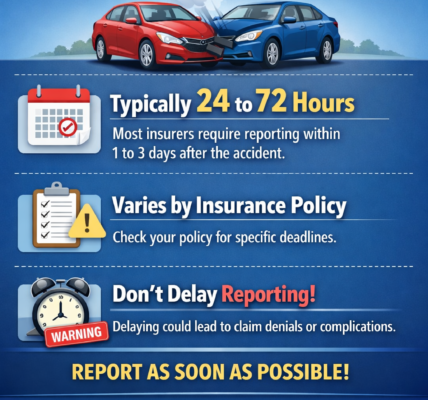
1. Reporting the Accident (Day 0–3)
The process begins when you notify your insurer (or the at-fault driver’s insurer). Most companies allow claims to be filed:
-
Online
-
Through a mobile app
-
By phone
-
Through an agent
Once filed:
-
A claim number is issued
-
An adjuster is assigned
-
Coverage is reviewed
Typical timeframe: 1–3 days.
2. Initial Investigation (Days 1–15)
The adjuster gathers information about the accident. This may include:
-
Statements from drivers
-
Police report review
-
Photos of vehicle damage
-
Witness statements
-
Insurance policy verification
Under California rules, the insurer must acknowledge your claim within 15 days. In straightforward cases, this investigation may be completed in about one to two weeks.
Typical timeframe: 7–15 days.
3. Vehicle Inspection and Damage Estimate (Days 3–14)
To determine how much the insurer will pay for repairs, your vehicle must be inspected. This can occur through:
-
An in-person inspection
-
A preferred repair network shop
-
A photo-based estimate
For minor accidents, estimates may be completed within a few days. If your vehicle may be declared a total loss, the insurer must determine its actual cash value, which can take longer.
Typical timeframe: 5–14 days.
4. Liability Determination (Days 7–30+)
In California, determining fault can significantly influence the timeline.
If fault is clear — for example, a rear-end collision with a supporting police report — the insurer may decide quickly.
However, delays can occur if:
-
Both drivers give conflicting accounts
-
There are no witnesses
-
Comparative fault percentages must be assigned
-
Multiple vehicles are involved
Typical timeframe: 1–4 weeks depending on complexity.
5. Settlement Evaluation and Negotiation (Weeks 2–8)
After fault and damage values are established, the insurer calculates a settlement. For property damage claims, this includes:
-
Repair costs
-
Total loss valuation (if applicable)
-
Rental car reimbursement
-
Towing/storage costs
If injuries are involved, the insurer also evaluates:
-
Medical bills
-
Lost wages
-
Other documented damages
For property-only claims with clear fault, settlement offers are often made within 2–4 weeks.
In injury cases, insurers frequently wait until medical treatment stabilizes before making a final offer. This can extend the timeline to several months.
Negotiation also affects timing. If you dispute the offer, additional review and communication may be required.
6. Payment and Claim Closure (1–3 Weeks After Agreement)
Once a settlement is accepted:
-
Payment is issued
-
Funds may go to you or directly to a repair shop
-
Lienholders may be involved if your vehicle is financed
Many insurers now use electronic payments, which can speed up this step.
How Long Does a Car Insurance Claim Take in Arizona?

Overall Timeline Expectations in California
Here’s what many drivers experience:
-
Minor property damage claim: 2–4 weeks
-
Moderate damage claim: 3–6 weeks
-
Injury claim (soft tissue or short treatment): 1–3 months
-
Serious injury or disputed fault case: Several months
-
Litigated claim: 1 year or more
Keep in mind that regulatory deadlines require insurers to communicate regularly, but complex cases naturally take longer.
Why Some Claims Take Longer in California
Several common factors can extend a claim timeline:
Comparative Fault Analysis
California’s pure comparative negligence system requires insurers to determine fault percentages, which can take time if facts are unclear.
Ongoing Medical Treatment
Insurers may wait until you reach a stable medical condition before finalizing settlement to avoid underestimating damages.
Total Loss Valuation Disputes
Determining the fair market value of a totaled vehicle sometimes leads to negotiation delays.
High Claim Volume
California’s large population means insurers often manage heavy claim volumes, especially after wildfires or severe weather events.
Documentation Gaps
Missing police reports, incomplete medical records, or delayed repair estimates can slow processing.
California Statute of Limitations
If a claim cannot be resolved and legal action becomes necessary, California law generally provides:
-
Two years from the accident date to file a personal injury lawsuit
-
Three years for property damage claims
These legal deadlines are separate from the insurance processing timeline but important to keep in mind.
How to Help Your California Claim Move Faster
While you can’t control every factor, you can reduce delays by:
Reporting Immediately
Notify your insurer as soon as possible after the accident.
Documenting Thoroughly
Take clear photos of vehicles, road conditions, and traffic signals.
Obtaining the Police Report
Official documentation often speeds up liability decisions.
Keeping Medical Records Organized
If injured, maintain copies of all treatment records and bills.
Responding Promptly
Return adjuster calls and emails quickly.
Following Up Periodically
If you haven’t received updates, politely request a status check.
Common Questions
Does California law require insurers to settle within 40 days?
Insurers must accept or deny a claim within 40 days after receiving sufficient proof of claim, but complex cases or incomplete documentation can extend that timeline with proper written explanation.
Does hiring a lawyer make it faster?
For straightforward claims, it may not significantly shorten the timeline. For disputed or serious injury cases, legal representation may help organize negotiations — though litigation itself can extend the overall timeframe.
What if the other driver is uninsured?
If you carry uninsured motorist coverage, your own insurer may handle the claim, though fault still needs to be evaluated.
How Long Does a Car Insurance Claim Take in Colorado?

Final Thoughts
There isn’t a single fixed number that answers how long a car insurance claim takes in California. However, most straightforward property damage claims resolve within a few weeks. Injury claims and disputed fault cases often take longer — sometimes several months.
California’s insurance regulations provide structured communication deadlines, which help ensure that claims are handled in a timely manner. Still, complexity, medical treatment, and negotiation all influence the final timeline.
Staying organized, documenting everything carefully, and communicating clearly with your adjuster can help your claim move as smoothly as possible.