
After a car accident — even a relatively minor one — one of the first things most people want to know is: How long will my insurance claim take? Unfortunately, there isn’t a single number that applies to every situation. A car insurance claim in Colorado can be resolved in a few weeks, or it might stretch into several months or more, depending on what happened, how complicated the claim is, and how the insurance company handles it.
This article breaks down the timeline you might expect, the stages of the claims process, and the factors that influence how long it can take. Knowing what to expect will reduce stress and help you make smart decisions after a crash.
How Long Does a Car Insurance Claim Take in Ohio

Colorado Is an “At-Fault” Insurance State
First, it’s important to understand that Colorado is an at-fault auto insurance state. That means if you’re in an accident, the driver whose actions caused the crash — and their insurer — are generally responsible for paying for damages and losses. That’s different from “no-fault” states where each driver’s own insurance pays certain costs regardless of fault.
In Colorado, fault matters for both vehicle damage and injury claims, so claims usually include investigating who caused the crash — and that process takes time.
Typical Phases and Timeframes for a Colorado Claim
Here’s a clear, detailed look at the main steps of an auto insurance claim in Colorado and how long each part usually takes:
1. Report the Accident — Immediately to Within a Few Days
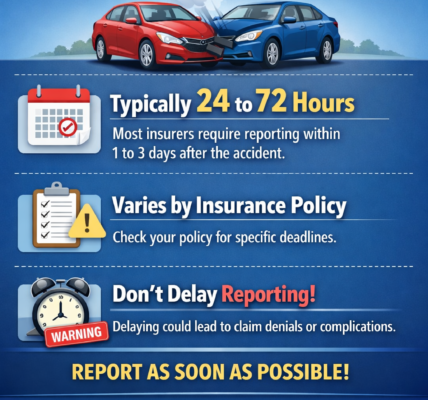
Most insurance policies — and Colorado law — require that you report accidents “promptly.” Many insurers ask you to report a crash within a few days of it happening. It’s best to do this as soon as you’re safely able to.
Once you report it:
-
The insurer creates a claim file
-
You receive a claim number
-
An adjuster is typically assigned
Typical time: Same day to 2–3 days
Reporting quickly doesn’t resolve the claim, but it starts the official process and prevents delays later.
2. Adjuster Contact and Initial Investigation — 1–7 Days
After you report the claim, a claims adjuster or representative usually reaches out to you soon after. They’ll:
-
Gather basic facts about the crash
-
Ask for documentation (photos, police report)
-
Request information from all drivers involved
This step is usually completed within the first week, especially if you provide documentation promptly.
Typical time: 1–7 days
3. Damage Assessment — 1–10 Days
To pay for repairs, the insurer needs to evaluate how badly your vehicle was damaged. This can happen in a few ways:
-
In person at a repair shop
-
Virtual estimate using uploaded photos
-
Adjuster inspection
In simple cases with clear damage, insurers often complete this within a week. But if parts are delayed or shops are busy, it can take longer.
Typical time: 1–10 days
4. Determining Fault and Liability — 1–30+ Days
Because Colorado is an at-fault state, insurers often spend significant time determining who caused the accident and to what degree. When one driver clearly caused the crash and the evidence is straightforward, this part can wrap up quickly.
But when fault is unclear or disputed — for example, both drivers have different versions of events — the insurer may:
-
Review police reports
-
Interview witnesses
-
Examine photos and statements
This stage is often the biggest variable in the timeline.
Typical time: 1–30+ days
5. Claim Evaluation and Settlement Negotiation — 2–8 Weeks
Once liability is clear and damage amounts are estimated, the insurer makes a settlement offer to pay for repairs, medical costs, or other losses. You can:
-
Accept the offer
-
Counter-offer or negotiate
If both sides agree quickly, this stage can finish in a couple of weeks. But complex injury cases or disagreements over value may stretch negotiations for months.
Typical time: 2–8 weeks (or longer in disputes)
6. Payment and Claim Closure — 1–4 Weeks After Agreement
Once a settlement is agreed to, the insurance company issues payment. The exact timing depends on:
-
The insurer’s payment process
-
Whether deductibles must be resolved
-
Whether funds go to a repair shop or to you
In many cases, payment arrives within a few weeks of agreement.
How Long Does a Car Insurance Claim Take in North Carolina?

Typical Total Timeline
Here’s what most Colorado auto insurance claims look like from start to finish:
| Claim Type | Typical Completion |
|---|---|
| Minor property damage only | 2–4 weeks |
| Standard injury and damage claim | 1–3 months |
| Complex/disputed fault claim | 3–6+ months |
| Claims involving lawsuits | 6 months to 1+ year |
These ranges are general — every claim has its own facts and rules — but they reflect what many Colorado drivers experience.
Colorado Statutes That Affect Your Claim Timing
Separate from the insurance company’s internal processes, Colorado law sets deadlines for when you can file a lawsuit related to a car accident. This is called the statute of limitations.
In most cases:
-
You have up to three years from the date of the crash to file a lawsuit for injuries or property damage.
-
If a lawsuit is necessary because the insurer won’t settle, the timeline can extend as long as litigation takes.
These legal deadlines are different from the insurance claim process, but they affect how long you could pursue your claim.
What Makes a Colorado Claim Take Longer?
Several factors commonly contribute to longer claim times in Colorado:
• Disputed Fault
When both drivers claim the other caused the crash, insurers need more evidence and time for evaluation.
• Serious Injuries
If medical treatment is ongoing, insurers often wait until you reach “maximum medical improvement” before finalizing settlement.
• Multiple Insurers
If both drivers have different companies involved, negotiations between carriers can slow things down.
• Legal Action
If you end up filing a lawsuit instead of settling directly with the insurer, timelines can stretch into many months or more.
• High Demand/Surge Times
After severe weather or holiday weekends, shops and adjusters can get backed up, slowing inspections and processing.
What You Can Do to Speed Up Your Claim
While you can’t control everything, you can take steps to help your claim move faster:
-
Report the accident immediately to your insurer (many ask within a few days).
-
Document the scene with photos of damage, road conditions, and the accident environment.
-
Get a police report — adjusters rely on official documentation.
-
Provide complete medical records promptly if injuries are involved.
-
Respond quickly to your claims adjuster’s requests for information.
How Long Does a Car Insurance Claim Take in Michigan?

Final Word: Expect Variation, Plan for Weeks, Not Days
There’s no single answer that will fit every Colorado auto insurance claim. But the reality for most drivers is:
-
Minor, clear-cut claims often finish in a few weeks
-
More complicated injury claims regularly take 1–3 months
-
Disputed or legal cases can stretch much longer
The best approach after a crash is to act quickly, document thoroughly, and communicate clearly with your insurer. That way, you give your claim the best chance of a fair and reasonably timely resolution — no matter where it lies on that timeline.