How Long Does It Take to Get a Car Repaired After Insurance Approval?

This article provides general educational information only and does not constitute legal or medical advice. Laws, insurance practices, and individual circumstances vary by jurisdiction. Readers should consult licensed medical or legal professionals for guidance specific to their situation.
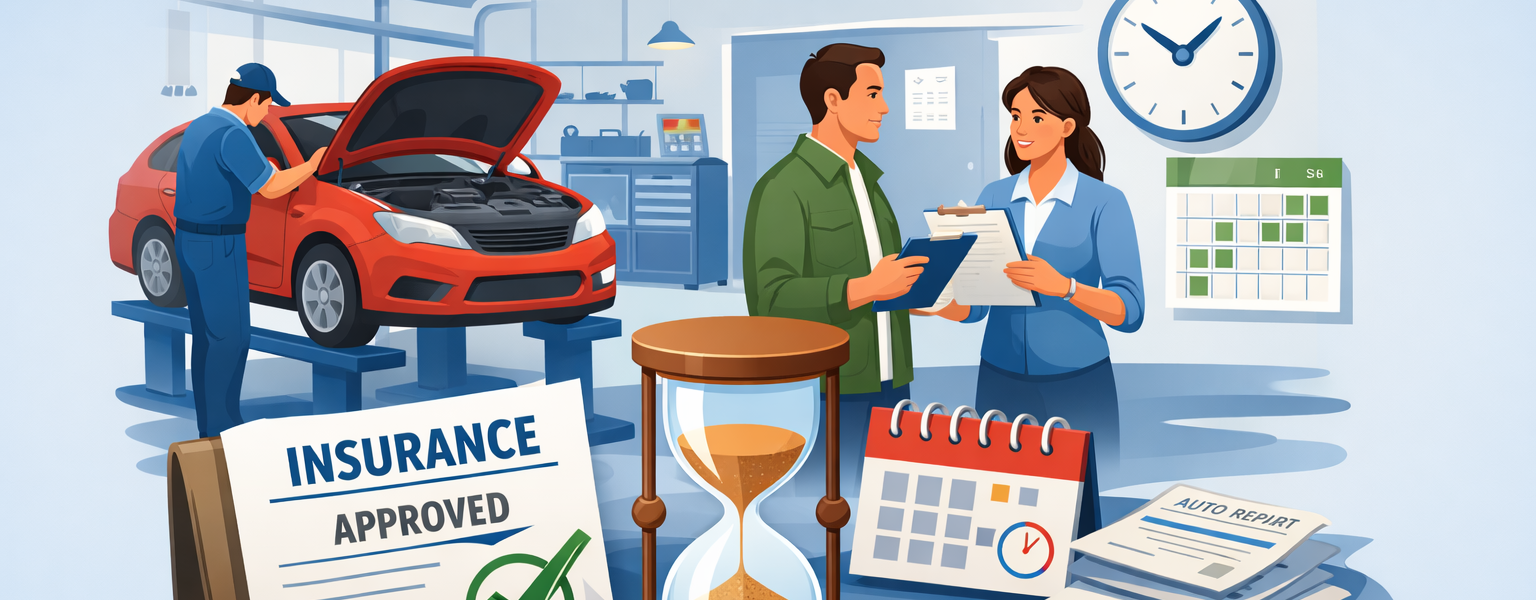
Once your insurance company approves your repair estimate, it can feel like the hardest part is over. Fault has been determined, the damage has been evaluated, and payment authorization has been issued. Naturally, the next question is: How long until my car is actually fixed?
The answer depends on several factors — including the severity of damage, parts availability, shop workload, and whether additional damage is discovered during repairs. While some vehicles are repaired in just a few days, others may take several weeks.
Here’s what typically happens after insurance approval and what affects the timeline.
Does Insurance Pay Medical Bills Directly After an Accident?

What “Insurance Approval” Actually Means
Insurance approval usually means the company has:
-
Reviewed the damage estimate
-
Confirmed coverage
-
Authorized payment for repairs
This approval allows the repair shop to begin work. However, approval does not automatically mean repairs start immediately. Several logistical steps still need to happen.
Average Repair Time After Approval
Below is a general guide for typical repair timelines once work begins:
-
Minor cosmetic damage (bumper, small panel): 3–5 business days
-
Moderate collision damage: 1–2 weeks
-
Extensive structural damage: 2–4 weeks
-
Severe damage with parts delays: 4+ weeks
These are averages. Some vehicles move faster, and others take longer depending on circumstances.
Step-by-Step: What Happens After Approval
1. Scheduling the Repair
If you haven’t already dropped off your vehicle, the shop may need to schedule you into their production calendar. High-volume shops sometimes book repairs several days out.
If your vehicle is already at the shop, work may begin shortly after authorization — often within a day or two.
2. Ordering Parts
Parts availability is one of the biggest variables in repair time.
The shop typically orders:
-
OEM (original manufacturer) parts
-
Aftermarket parts
-
Recycled or salvaged parts
If parts are in stock locally, they may arrive within 1–3 days. If parts are on backorder or must ship from out of state, delays can extend repair time by days or even weeks.
In recent years, supply chain delays have made parts availability one of the most common causes of extended repair timelines.
3. Disassembly and Hidden Damage
Even after approval, additional damage is sometimes discovered once technicians begin disassembling the vehicle.
If hidden structural or mechanical damage appears:
-
The shop submits a supplemental estimate to the insurer.
-
The insurer reviews and approves additional repairs.
-
Work may pause until authorization is received.
This supplemental process can add several days to the overall timeline.
4. Body Work and Structural Repairs
If frame straightening or structural work is required, repairs may take longer. Modern vehicles contain:
-
Advanced driver assistance systems (ADAS)
-
Crumple zones
-
Safety sensors
-
Integrated electronics
Repairing and recalibrating these systems requires precision and time.
5. Paint and Refinishing
Painting adds additional steps:
-
Surface preparation
-
Color matching
-
Painting
-
Clear coat application
-
Drying and curing time
Even minor paint work can add 1–3 days due to drying and curing requirements.
6. Reassembly and Quality Checks
After repairs and painting are complete:
-
The vehicle is reassembled
-
Safety systems are recalibrated
-
Alignment is checked
-
Final inspections are performed
Many shops also perform road tests before returning the vehicle.
Can You Switch Insurance Companies During an Open Claim?

What Can Extend Repair Time?
Several common factors can push repairs beyond the average timeline:
Parts Backorders
Manufacturer backorders are one of the most frequent delays, especially for newer models or vehicles with specialty components.
High Shop Volume
After severe weather events or holiday travel seasons, repair shops often experience backlogs.
Total Loss Reclassification
If damage appears worse during repairs, the insurer may reconsider whether the vehicle should be declared a total loss. This review can pause repairs.
Insurance Supplemental Delays
If additional approval is needed, waiting for adjuster review can add several days.
Calibration of Safety Systems
Modern vehicles often require recalibration of sensors, cameras, and radar systems after repairs. This may require specialized equipment or a secondary service provider.
Will Insurance Cover Rental Cars During Repairs?
If you have rental reimbursement coverage, your policy may pay for a rental vehicle while your car is being repaired — subject to daily and total limits.
Rental coverage typically ends when:
-
Repairs are completed
-
The vehicle is declared a total loss
-
Policy limits are reached
If parts delays extend repairs beyond rental limits, you may need to cover additional rental costs yourself unless the at-fault driver’s insurer is responsible.
How to Get a More Accurate Timeline
The best way to estimate repair time is to ask the repair shop directly once parts are ordered and work begins.
Questions to ask:
-
Are any parts on backorder?
-
Is structural work required?
-
Will recalibration be needed?
-
Has a supplement already been submitted?
-
What is the projected completion date?
Repair shops usually provide an estimated completion date, though that date can shift if complications arise.
Common Misunderstandings
“Insurance approved it, so it should be done tomorrow.”
Approval allows repairs to start, but actual repair work still takes time.
“The shop is delaying on purpose.”
Most delays are related to parts, workload, or supplemental approvals — not intentional slowdown.
“If it’s just a bumper, it should only take one day.”
Even minor repairs can involve paint curing and drying times that extend beyond a single day.
Realistic Expectations
For many everyday accidents involving moderate damage, drivers can expect repairs to take about one to two weeks after approval.
Minor cosmetic repairs may finish in under a week, while more extensive repairs involving structural damage or part delays may take several weeks.
The complexity of modern vehicles — especially with integrated electronics and safety systems — means repairs today often require more time than they did years ago.
What Happens If Repair Costs Exceed the Insurance Estimate?

Final Thoughts
After insurance approval, the clock doesn’t instantly reset to zero — the physical repair process still has multiple stages. In many cases, cars are repaired within a week or two. However, parts availability, hidden damage, and shop workload can extend that timeframe.
Staying in communication with your repair shop is the best way to stay informed. They can provide the most accurate and up-to-date estimate based on your specific vehicle and repair needs.
While waiting can be frustrating, understanding the steps involved makes the process more predictable — and helps set realistic expectations for getting back on the road.