
This article provides general educational information only and does not constitute legal or medical advice. Laws, insurance practices, and individual circumstances vary by jurisdiction. Readers should consult licensed medical or legal professionals for guidance specific to their situation.
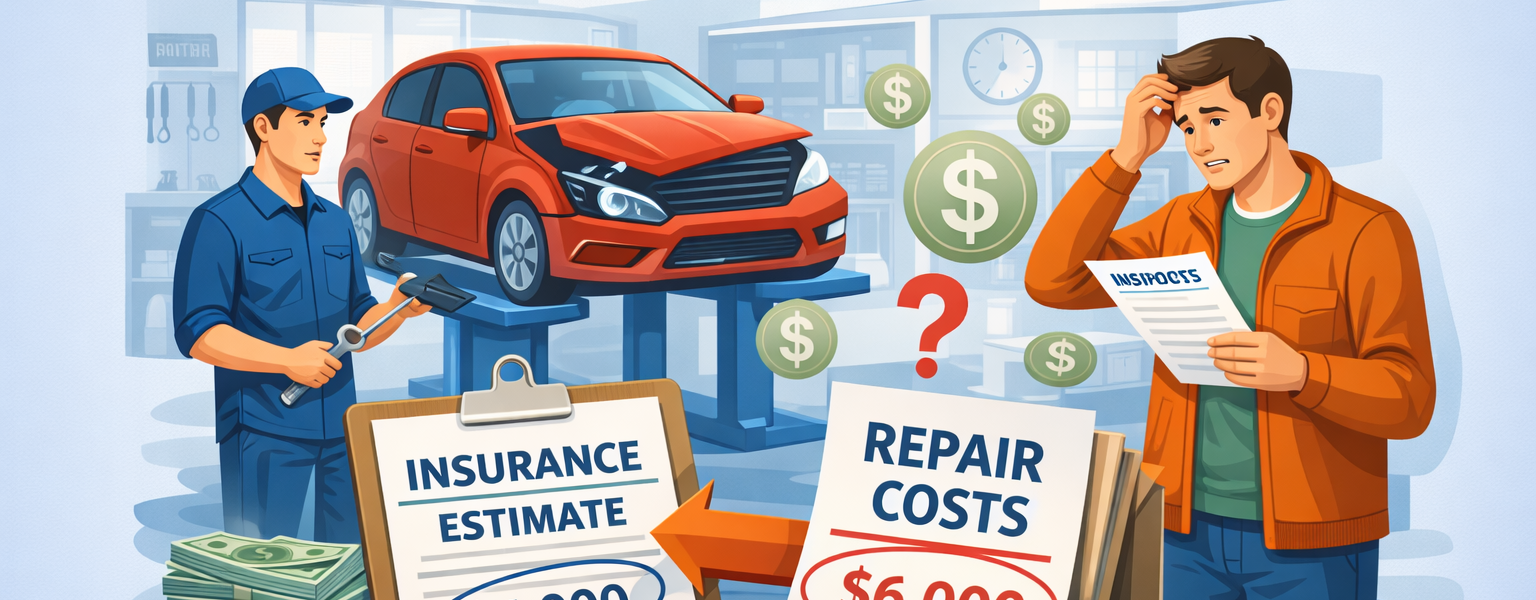
It’s a common situation after a car accident: the insurance company provides an estimate for repairs, you take the vehicle to a body shop, and then the shop says the actual repair cost is higher than what the insurer approved.
If that happens, don’t panic. It does not automatically mean you’re stuck paying the difference. In many cases, this is a routine part of the repair process.
Here’s how it typically works, why it happens, and what you should expect.
Does Insurance Record Phone Calls After an Accident Claim?

Why Repair Costs Often Increase After the Initial Estimate
An insurance estimate is usually based on a visual inspection. Adjusters look at:
-
Exterior damage
-
Visible structural issues
-
Photos provided by the driver or shop
-
Industry-standard labor and parts pricing databases
However, some damage is hidden. Once the body shop begins repairs and removes panels, bumpers, or other components, additional problems may appear. These can include:
-
Bent internal supports
-
Damaged sensors or wiring
-
Frame or alignment issues
-
Hidden mechanical damage
-
Safety system impacts (like airbag sensors)
Because modern vehicles have complex electronics and safety systems, supplemental damage is common.
The Supplemental Estimate Process
When the repair shop finds additional damage, they don’t immediately bill you for the difference. Instead, they submit what’s called a supplemental estimate (often called a “supplement”).
Here’s what usually happens:
-
The repair shop documents the newly discovered damage.
-
Photos and itemized costs are sent to the insurance company.
-
The insurer reviews the supplement.
-
If approved, the insurer issues additional payment.
This process is routine in the collision repair industry. Many repairs involve at least one supplement.
Will Insurance Pay the Additional Costs?
In most cases, yes — if the additional damage is related to the accident and covered under your policy.
Insurance companies are responsible for paying reasonable and necessary repair costs tied to the covered loss. If the hidden damage clearly resulted from the accident, the insurer typically approves the supplement.
However, there are situations where disputes arise.
Situations Where Insurance Might Question Additional Costs
1. Unrelated Damage
If the shop identifies damage unrelated to the accident — for example, pre-existing wear or old impact damage — the insurer may deny coverage for that portion.
2. Policy Limits
If the repair cost approaches your policy’s property damage limit (or the at-fault driver’s limit), there may be a cap on what insurance will pay.
3. Total Loss Threshold
If the supplemental estimate pushes the total repair cost close to or beyond the vehicle’s value, the insurer may declare the vehicle a total loss instead of approving more repairs.
4. Labor Rate Disputes
Sometimes insurers and repair shops disagree about labor rates or parts pricing. In those cases, negotiations may occur between the shop and the insurance company.
What If the Insurance Company Refuses to Pay the Full Supplement?
If a dispute arises, here are possible outcomes:
The Shop Negotiates Directly With the Insurer
This is common. Repair facilities deal with insurers daily and often resolve pricing disagreements without involving the vehicle owner.
How Long Do You Have to Report a Car Accident to Insurance?

You May Be Asked to Pay the Difference
This can happen if:
-
You chose a shop that charges rates above what the insurer considers reasonable.
-
You authorized upgrades or non-covered repairs.
-
The damage is not accident-related.
Before agreeing to pay anything, ask the shop and insurer to clearly explain what portion is not covered and why.
You Can Request a Written Explanation
If the insurer denies part of a supplement, you can request a written explanation of the decision. This provides clarity and documentation.
Can You Choose Your Own Repair Shop?
Yes. In most states, you have the right to choose your repair shop. However:
-
Insurance companies often have “preferred” repair networks.
-
Non-network shops may charge higher labor rates.
-
If rates exceed what the insurer considers reasonable, there could be negotiation or partial payment issues.
Choosing a shop within the insurer’s network sometimes reduces pricing disputes, but it is not required.
What Happens If Repairs Exceed the Vehicle’s Value?
If supplemental repairs push the total cost above a certain percentage of the vehicle’s market value (often 70–80%, depending on the insurer and state), the insurer may declare it a total loss.
In that case:
-
Repairs stop.
-
The insurer calculates the vehicle’s actual cash value (ACV).
-
You receive a payout based on that value (minus deductible, if applicable).
This can happen even if repairs already began.
Will This Delay My Repair?
Yes, supplements can delay completion.
The process of:
-
Discovering hidden damage
-
Submitting documentation
-
Waiting for insurer approval
Can add days — sometimes a week or more — to the repair timeline.
The delay depends on how quickly the insurer reviews the supplemental request and whether further inspection is required.
Do You Still Pay Your Deductible?
Yes, if you’re using your own collision coverage, your deductible still applies. The deductible does not increase because of a supplement. It’s applied once per claim, not per estimate.
If you are filing under another driver’s liability coverage and they are fully at fault, you typically would not pay a deductible.
How Long Does It Take to Get a Car Repaired After Insurance Approval?

Can You Challenge the Insurance Estimate?
If you believe the insurer’s estimate is unreasonably low, you can:
-
Request a reinspection.
-
Ask for a detailed breakdown of the estimate.
-
Provide written documentation from the repair shop.
-
Escalate to a claims supervisor if necessary.
In rare cases involving major disputes, state insurance regulators can review complaints about claim handling practices.