
This article provides general educational information only and does not constitute legal or medical advice. Laws, insurance practices, and individual circumstances vary by jurisdiction. Readers should consult licensed medical or legal professionals for guidance specific to their situation.
Accidents are stressful. New damage, injuries, car rental logistics, police reports — and then there’s the insurance claim. One of the most common questions drivers ask after a crash in Ohio is: “How long will this claim take?”
The honest answer is that it depends on several variables. Some claims are resolved in a matter of days, while others take weeks or even months. The goal of this article is to give you clear expectations based on real-world timelines and explain what affects the speed of your claim. When you know what to expect, you can plan ahead — and avoid unnecessary frustration.
How Long Does a Car Insurance Claim Take in North Carolina?

Ohio’s Fault Insurance System (Key Context)
Ohio uses a traditional fault-based auto insurance system. That means after a crash, the at-fault driver’s insurer typically pays for the other party’s damages. This differs from “no-fault” states where each driver’s insurer pays their own medical costs regardless of fault.
In a fault system like Ohio’s, determining who caused the crash is part of the process. That can add time — especially in cases where blame isn’t clear. Property damage, injury claims, negotiations, and paperwork all influence how long your claim takes.
Typical Stages of an Ohio Car Insurance Claim
Every claim generally follows a similar sequence of events. Here’s a breakdown of each phase, with typical time ranges you can expect:
1. Initial Accident Report — Within 24–48 Hours
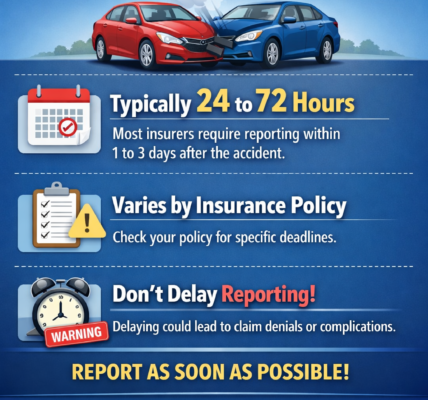
Right after an accident, your first step is reporting the crash to your insurer. Most policies require you to do this “promptly,” meaning as soon as possible — ideally within the first 24 to 48 hours.
After your report:
-
You’ll receive a claim number.
-
A claims representative or adjuster may contact you.
-
Your insurer reviews your coverage and the basics of what happened.
Typical time: 1–2 days.
Prompt reporting doesn’t guarantee a faster resolution, but it starts the process and avoids delays later.
2. Information Gathering — 1 to 5 Days
Once the claim is opened, the insurer will collect key details:
-
The accident report (if police responded)
-
Photos of damage and the scene
-
Statements from you and other drivers
-
Medical information (if injury is involved)
-
Witness information
If you provide clear, organized documentation, this stage often finishes quickly. If items are missing or unclear, it can drag on.
Typical time: 1–5 days.
3. Damage Assessment and Vehicle Inspection — 1 to 7 Days
Next, the insurer needs to evaluate how much your vehicle — or the other vehicle — was damaged. They can do this through:
-
In-person inspection at a body shop
-
Virtual inspection using photos
-
Appointment with a claims adjuster
Timing depends on availability. During busy periods (e.g., after a storm or holiday weekend), shops and adjusters may have backlogs.
Typical time: 1–7 days.
4. Determining Fault — 3 to 30+ Days
In Ohio’s fault system, this is one of the biggest timeline drivers.
If fault is clearcut — for example, a driver rear-ends you and that fact is reflected in the police report and photos — the insurer can often decide fault within days.
But if fault is disputed or unclear, the insurer may:
-
Review additional evidence
-
Get witness statements
-
Analyze police reports
-
Speak with both drivers’ statements
When fault is disputed, this part of the process can take several weeks, especially if both drivers offer different accounts.
Typical time: 3–30+ days.
5. Claim Evaluation & Settlement Offer — 7 to 30 Days
After fault and damage estimates are clear, the insurer calculates your settlement. This includes:
-
Repair or replacement cost
-
Diminished value (if applicable)
-
Medical claims or lost wages
-
Rental car or transportation reimbursement
If you and the insurer agree on the amount, you receive an offer and can either accept or negotiate. Negotiations add time.
Typical time: 7–30 days.
How Long Does a Car Insurance Claim Take in Michigan?

6. Payment & Claim Closure — 1 to 10+ Days
Once you accept a settlement:
-
The insurer issues payment
-
Funds go to you or directly to the shop
-
Any liens or loans are addressed
Different insurers have different payment processes, so check with your adjuster to know when you’ll see the funds.
Typical time: 1–10 days.
Typical Timeline at a Glance
| Phase | Typical Time Range |
|---|---|
| Report the crash | 1–2 days |
| Information gathering | 1–5 days |
| Damage assessment | 1–7 days |
| Fault determination | 3–30+ days |
| Settlement evaluation/offer | 7–30 days |
| Payment and claim closure | 1–10 days |
Most straightforward claims in Ohio wrap up in about 2–6 weeks. Complex claims involving disputed fault, injuries, or multiple parties commonly take 6–12+ weeks.
What Can Make a Claim Take Longer?
Some claims seem stuck not because of negligence but because of external factors. Here’s what typically slows things down:
• Disputed Fault
When both drivers offer different statements, insurers gather more evidence for fault decisions.
• Medical Claims (Injuries)
Injury claims involve ongoing treatment, medical records, bills, and sometimes independent medical reviews. That adds time.
• High Repair Estimates
When damage is extensive or parts are hard to source, adjusters and shops take longer to finalize estimates.
• Seasonal or Major Event Backlogs
After severe weather or large accidents, body shops — and even insurance adjusters — can get backed up.
• Missing or Delayed Documentation
If police reports, photos, or medical records aren’t submitted promptly, the insurer has to follow up, extending timelines.
What Can Make a Claim Resolve Faster?
There are steps you can take to speed up your claim:
1. Take Clear Photos Immediately
Photos of damage, road conditions, and the crash scene are extremely helpful and reduce back-and-forth.
2. Get and Share the Police Report
Official reports carry lots of weight in fault decisions.
3. Organize Medical Records Promptly
When injury is part of the claim, submitting records as they arrive helps the insurer stay current.
4. Respond Quickly to Your Adjuster
If your adjuster calls for more information, a prompt reply keeps the process moving.
5. Use Digital Tools
Many insurers now allow video uploads, online claim tracking, and photo estimates — which speed up inspections.
Ohio Insurance Rules & Timeliness
Ohio law requires insurers to act in good faith and conduct reasonable investigations. There isn’t a specific “deadline” carved in stone for every claim, but unreasonable delay or denial can be challenged.
If you feel your claim is delayed without justification, you can contact the Ohio Department of Insurance to ask about your rights and next steps.
Common Misconceptions About Claim Timelines
Myth: Claims Always Take 30 Days
Not true. Fast, straightforward claims frequently settle in under two weeks.
Myth: Your Insurance Has a Legal Clock
Insurers have to be reasonable, but there isn’t a universal statutory timeline that forces every claim to close by a certain day.
Myth: A Claim Takes Longer If You File Through an Agent
False. The route you choose — phone, app, agent, or direct — doesn’t inherently change the time needed for investigation and settlement.
Special Cases That Take More Time
Some situations almost always take longer:
• Hit-and-Run Claims
Insurers often need police proof and may investigate more thoroughly.
• Lawsuits & Legal Disputes
If a claim turns into litigation, timelines are dictated by court procedures.
• Multiple Insurers Involved
When both drivers have different carriers, communications between companies add time.
• Business or Commercial Vehicles
Claims involving business use or fleet insurance usually include more documentation.
How Long Does a Car Insurance Claim Take in Texas?

Final Takeaway
There’s no single number that fits every claim in Ohio, but here’s a practical expectation:
-
Simple property damage: 1–3 weeks
-
Claims involving injury: 3–8 weeks
-
Disputed fault or complex cases: 6–12+ weeks
Your claim’s actual timeline depends on documentation, cooperation, fault clarity, and the type of damage. The better organized and communicative you are, the smoother and faster the process will be.
If you ever feel unsure about where your claim stands, ask your adjuster for an estimated timeline and checklist of any missing items. A clear question often brings a clear answer.