
Disclaimer: This article provides general informational and educational content only. It does not constitute legal or financial advice. Laws, insurance practices, and claim evaluation standards vary by jurisdiction and individual circumstances. Readers should consult qualified professionals for guidance specific to their situation.
Types of Damages in Car Accident Claims: An Educational Overview
Car accidents can result in a wide range of consequences that extend beyond vehicle repair costs. In addition to property damage, collisions may lead to medical treatment, temporary or long-term limitations, and changes to daily functioning. In legal and insurance contexts, these losses are commonly grouped under the term damages.
Damages refer to the categories of loss that may be considered during the evaluation of a car accident claim. Some damages involve direct financial costs, while others relate to non-economic effects that are not easily measured using receipts or invoices.
This article provides a general educational overview of the types of damages commonly reviewed in car accident claims and explains how each category is typically evaluated. It is intended to describe common practices rather than recommend specific actions or outcomes.

Medical Treatment Expenses
Medical treatment expenses are among the most frequently reviewed components of a car accident claim. These expenses may arise even in collisions that initially appear minor, as some injuries require follow-up evaluation or delayed treatment.
Medical expenses commonly reviewed in claims may include:
-
Emergency or urgent care evaluations
-
Physician visits and follow-up appointments
-
Diagnostic testing such as X-rays, CT scans, or MRI studies
-
Physical therapy or rehabilitation services
-
Prescription medications
-
Surgical procedures and post-operative care
Insurance evaluations typically rely on medical records and billing statements to assess these expenses. The focus is generally placed on documented treatment rather than estimates or informal descriptions.
Lost Income and Employment-Related Impacts
Car accident injuries may temporarily or permanently affect an individual’s ability to work. As a result, employment-related losses are often reviewed as part of a claim evaluation.
Employment-related damages commonly considered include:
-
Income missed during recovery
-
Reduced work hours related to injury limitations
-
Long-term changes in work capacity
Documentation such as payroll records, tax filings, or employer verification is typically used to assess these losses. In claims involving extended recovery or permanent limitations, employment impacts may be evaluated over a longer period.
Property Damage and Personal Belongings
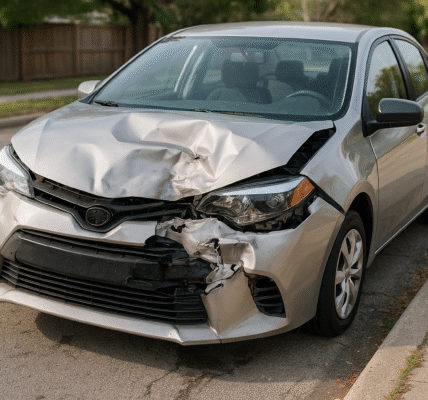
Property damage is often one of the most visible consequences of a car accident. While vehicle repair or replacement is commonly reviewed, property damage may also include other personal items affected by the collision.
Property-related damages may involve:
-
Vehicle repair or total loss valuation
-
Damage to personal items located in the vehicle
-
Towing or storage costs
-
Temporary transportation expenses
These damages are generally evaluated using repair estimates, photographs, and valuation data rather than subjective assessments.

Physical Pain and Discomfort
In addition to measurable financial losses, car accident claims may include non-economic effects related to physical discomfort or limitations. These effects are often grouped under the category of physical pain.
Physical pain considerations may include:
-
Ongoing discomfort associated with injury
-
Reduced mobility or endurance
-
Limitations on routine physical activities
Medical records often provide context for these effects by documenting reported symptoms, treatment response, and recovery progression over time.
Emotional or Psychological Effects
Some individuals experience emotional or psychological changes following a car accident. These effects may develop immediately or emerge over time and can vary significantly between individuals.
Emotional effects commonly discussed in evaluation contexts may include:
-
Stress or anxiety related to the collision
-
Changes in sleep patterns
-
Emotional distress associated with physical limitations
These effects are typically reviewed in conjunction with medical documentation and reported functional changes rather than in isolation.
Loss of Enjoyment or Lifestyle Changes
Certain injuries may affect an individual’s ability to engage in activities that were previously part of daily life. These lifestyle changes are sometimes considered during claim evaluation as part of non-economic damages.
Examples of lifestyle impacts may include:
-
Reduced participation in recreational activities
-
Difficulty performing household tasks
-
Changes in social or family routines
Evaluation of these effects often relies on consistency across medical records, treatment notes, and reported functional limitations.
Future or Ongoing Losses
Some accident-related damages are not limited to past events. In claims involving long-term recovery or permanent injury, future impacts may also be reviewed.
Future considerations may involve:
-
Ongoing medical treatment
-
Long-term physical limitations
-
Continued employment impacts
These elements are typically assessed based on medical documentation and professional evaluations rather than speculation.

Future or Ongoing Losses
Some accident-related damages are not limited to past events. In claims involving long-term recovery or permanent injury, future impacts may also be reviewed.
Future considerations may involve:
-
Ongoing medical treatment
-
Long-term physical limitations
-
Continued employment impacts
These elements are typically assessed based on medical documentation and professional evaluations rather than speculation.
Punitive Damages in Limited Circumstances
Punitive damages differ from other categories of damages. Rather than addressing losses, they are intended to address particularly serious or reckless conduct. Punitive damages are not available in every case and are typically awarded only under specific legal standards.
Examples of circumstances where punitive damages may be discussed include cases involving:
-
Extremely reckless behavior
-
Intentional misconduct
Punitive damages are generally determined by courts rather than insurance companies and are subject to strict legal requirements that vary by jurisdiction.
How Damages Are Reviewed Collectively
Damages in car accident claims are usually evaluated as part of a broader review rather than in isolation. Insurers and courts typically consider:
-
Medical documentation
-
Employment records
-
Property valuations
-
Functional limitations
-
Duration and consistency of reported effects
The overall pattern reflected in the records often plays a larger role than any single element.
Variability Between Claims
No two car accident claims are identical. Differences in injuries, recovery timelines, employment circumstances, and jurisdictional standards can all influence how damages are evaluated.
As a result, claims that appear similar at a surface level may be reviewed differently based on their documented details.
Summary
Car accident damages generally fall into multiple categories, including medical expenses, employment impacts, property damage, and non-economic effects such as physical discomfort or emotional strain. These damages are typically evaluated using documentation, timelines, and consistency across records.
Understanding the general categories of damages and how they are commonly reviewed can provide useful context for individuals navigating the insurance or legal process. While each claim is unique, damage evaluations generally reflect established review practices rather than isolated factors.
Read: Questions to Ask Before Hiring a Lawyer
Last reviewed for informational accuracy: January 2026